

Website lead generation in Toronto depends on more than having a professional-looking website. A business website can load quickly and receive traffic while still generating very few meaningful inquiries.
For Toronto businesses, that creates an important question: Is your website actually helping generate leads, or is it simply providing information?
Effective website lead generation in Toronto requires more than attracting visitors. A website needs to help the right visitors understand what the business offers, establish enough trust for them to take the next step, and make that next step easy.
Here are some of the areas worth examining.
Website Lead Generation in Toronto Requires More Than Traffic
Getting people to a website is important, but traffic alone isn’t the objective for most businesses.
A company could attract hundreds or thousands of visitors without generating meaningful inquiries if those visitors don’t understand the offer or can’t quickly determine whether the business is right for them.
This is why traffic and conversions should be considered together.
Instead of only asking, “How many people visited our website?” businesses should also consider:
- How many visitors contacted us?
- Which pages generated inquiries?
- Where did those visitors come from?
- Which services attracted the most interest?
- Are visitors reaching important conversion pages?
Understanding what happens after someone reaches the website can reveal opportunities that traffic statistics alone may miss.
Make Your Value Clear Quickly
When someone arrives on a business website, they shouldn’t have to spend several minutes figuring out what the company does.
The opening section of an important service page should communicate the service, who it is intended for, and why someone should continue reading.
This becomes especially important when visitors arrive directly on an internal page from Google, social media, an advertisement, or another website.
They may never see the homepage.
Clear page headings, concise introductory copy, and logical navigation can help visitors understand where they are and what the business offers.
Give Visitors a Clear Next Step
One of the simplest lead-generation problems is also one of the most common: the visitor doesn’t know what to do next.
A website should provide clear calls to action based on the type of business and the visitor’s likely intent.
That might include:
Request a quote
Schedule a consultation
Call our team
Book an appointment
Ask a question
The appropriate action will vary by business, but visitors shouldn’t have to search for a way to make contact.
For campaigns focused on a particular service or audience, a dedicated landing page designed to generate leads can also provide a more focused experience than sending every visitor to the homepage.
Build Trust Before Asking for the Lead
Visitors are unlikely to contact a company they don’t trust.
Before completing a form or making a call, prospective customers may look for evidence that the business is credible.
Depending on the industry, that could include customer reviews, testimonials, case studies, certifications, project examples, recognizable clients, detailed service information, or an informative About page.
The objective isn’t to fill every page with badges and claims. It’s to provide enough genuine evidence for visitors to feel comfortable taking the next step.
Keep Contact Forms Practical
Forms can be useful for qualifying potential customers, but asking for too much information too early can create unnecessary friction.
A person making an initial inquiry may not be ready to provide detailed budgets, project specifications, company information, and several other fields.
Ask for the information genuinely needed to begin the conversation.
More detailed qualification can happen later when appropriate.
Don’t Ignore the Mobile Experience
A website may look excellent on a large desktop monitor while being frustrating to use on a phone.
Buttons can become difficult to tap. Forms may be cumbersome. Important content can get pushed too far down the page. Navigation may become confusing.
Because potential customers may discover a business while using a mobile device, lead-generation elements should work comfortably across screen sizes.
Businesses considering a significant update should therefore evaluate more than appearance when planning a website redesign in Toronto. Usability and the path from visitor to inquiry should be part of the redesign process.
Different Visitors Need Different Information
Not every visitor arrives with the same level of knowledge or purchase intent.
Someone searching for a specific service may be close to contacting a provider. Another visitor may still be comparing options and researching the problem.
A useful business website supports both.
Service pages can explain what the company offers, while FAQs, articles, case studies, and supporting content can answer questions that arise earlier in the decision-making process.
For companies with more complex requirements or sales processes, custom website development in Toronto can also make it possible to build functionality around how customers actually interact with the business.
Measure Website Lead Generation Results in Toronto
Website lead generation in Toronto improves when businesses understand which parts of their website are actually contributing to inquiries and business opportunities.
Depending on the business, useful measurements might include:
- Contact form submissions
- Phone calls
- Appointment bookings
- Quote requests
- Downloads
- Email inquiries
- Visits to important service pages
The goal isn’t to track every possible action.
It’s to identify which pages, traffic sources, and calls to action contribute to genuine business opportunities.
That information can then guide future website and marketing decisions.
A Business Website Should Have a Job
A website doesn’t need aggressive sales messaging on every page.
But it should have a purpose.
For many Toronto businesses, that purpose includes explaining services, establishing credibility, answering potential customer questions, and creating opportunities for people to make contact.
If a website receives visitors but rarely produces inquiries, increasing traffic may not be the first problem to solve.
It may be worth examining what happens after the visitor arrives.
A website that combines relevant traffic with clear messaging, useful information, credibility, and straightforward calls to action has a much better chance of becoming a genuine lead-generation asset for the business.

Related Posts
October 22, 2026
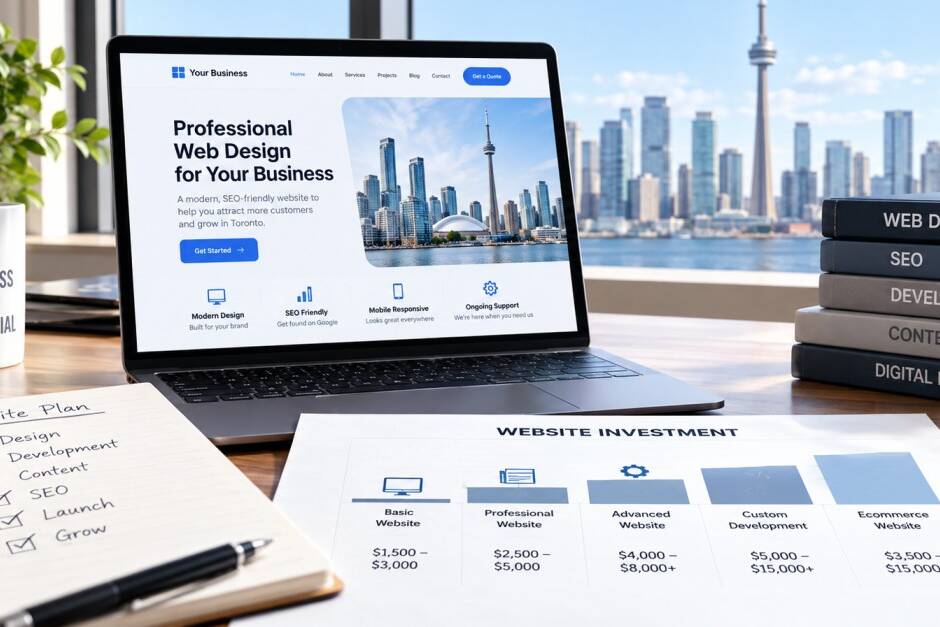
How Much Does a Small Business Website Cost in Toronto in 2026?
How much does a small business website cost in Toronto in 2026? Explore typical…

October 5, 2026
How to Redesign Your Toronto Website Without Losing SEO
A new website should bring in more business, not less. Yet one of the most…
October 5, 2026
AODA Website Compliance: What Toronto Businesses Need to Know
If your organization operates in Ontario, website accessibility is not only a…
